Make maintenance records and quality information easier to use.
Teams need reliable records of equipment, inspections, shifts and exceptions. We help connect that information and reduce time spent building reports, searching for instructions and preparing audits.
Illustrative industrial scenario — not a report of an implemented project.
Illustrative example — no client data. This shows a possible process, not a product available off the shelf. We verify the specific steps, connections and permissions for your company. How it works is explained on the AI Agents & Automation page.
Where work gets delayed
- Shift records are copied into spreadsheets after the shift.
- Employees must check several document versions to find the approved procedure.
- Audit evidence is assembled manually shortly before an inspection.
- Upcoming maintenance deadlines are not visible to the right person.
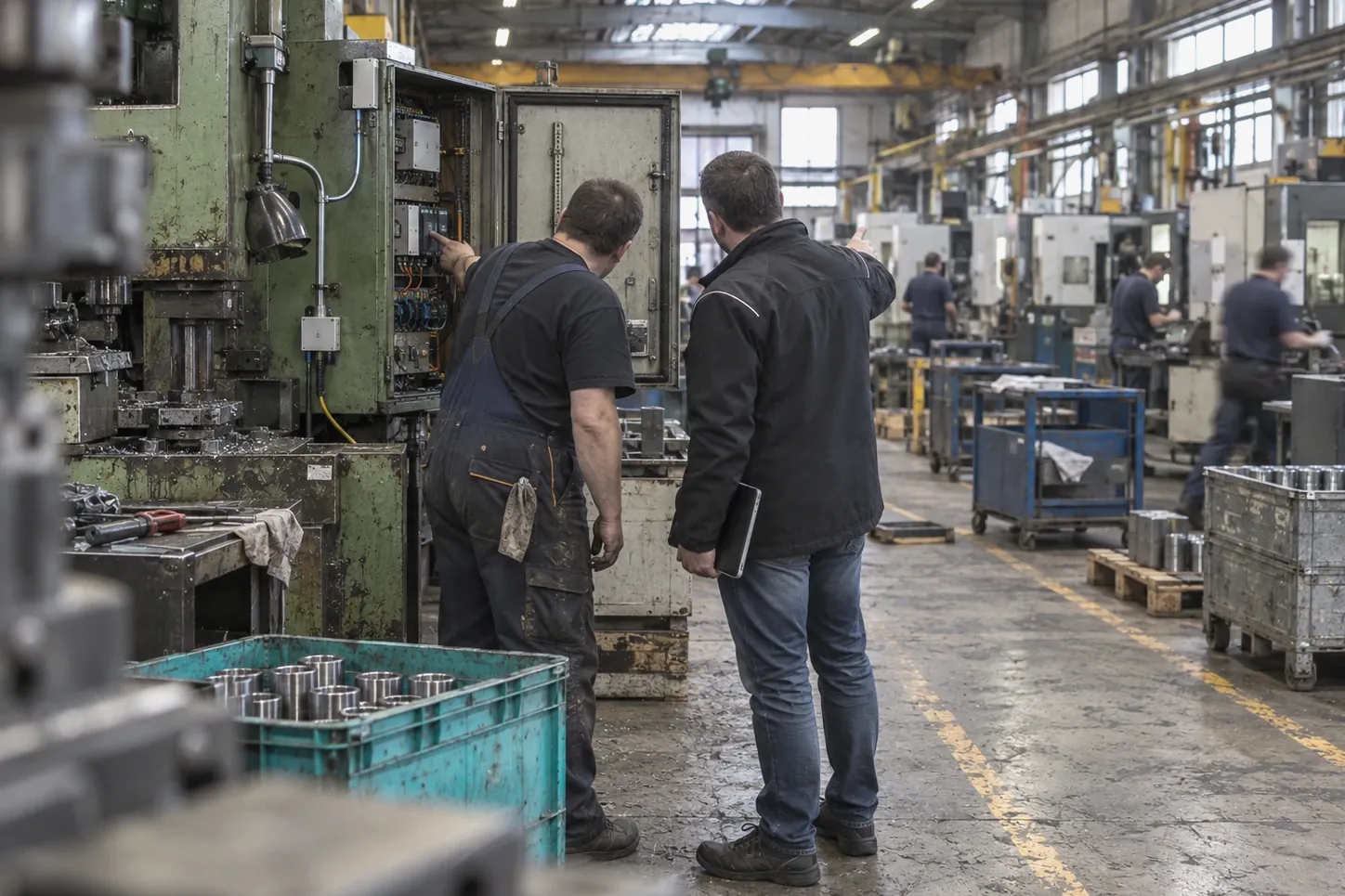
An improved process could look like this
Illustrative example — no client data.
What automation could handle
Shift summaries
Compile available records into a draft for human review.
Inspection alerts
Flag deadlines and overdue work using agreed data.
Audit preparation
Gather relevant documents and identify gaps.
Quality monitoring
Compare available readings or records with defined limits.
What we check first: Data completeness, equipment identifiers, document control, approval requirements and the reliability of operational inputs. Preparing maintenance recommendations is not the same as controlling industrial machinery.
What we measure: Time spent preparing records, availability of correct instructions, overdue inspection rates and time needed to resolve flagged issues.
How to start
Start with one recurring record, report or inspection process. We can discuss it in 30 minutes, map the dependencies and assess a practical first improvement.
30-minute call
Start with one recurring record, report or inspection process.
Strategic workshop
In a three-hour strategic workshop we map the dependencies and assess a practical first improvement.
Questions we often hear
Will AI control our machines?
Can we keep the existing maintenance system?
What will be measured?
How much does implementation cost?
Where is manual work slowing your business down?
Tell us about one process, where it gets delayed and which systems are involved. In a 30-minute call, we will discuss whether a workshop, process review or another first step makes sense.
The initial call is an introduction, not a technical audit. Any further work is scoped and agreed separately.